Capture. Understand. Act.
How BagsID recognises every bag by its own appearance — above and below the wing — and turns it into data your systems can act on.
Every bag, every touchpoint, without stopping anything.
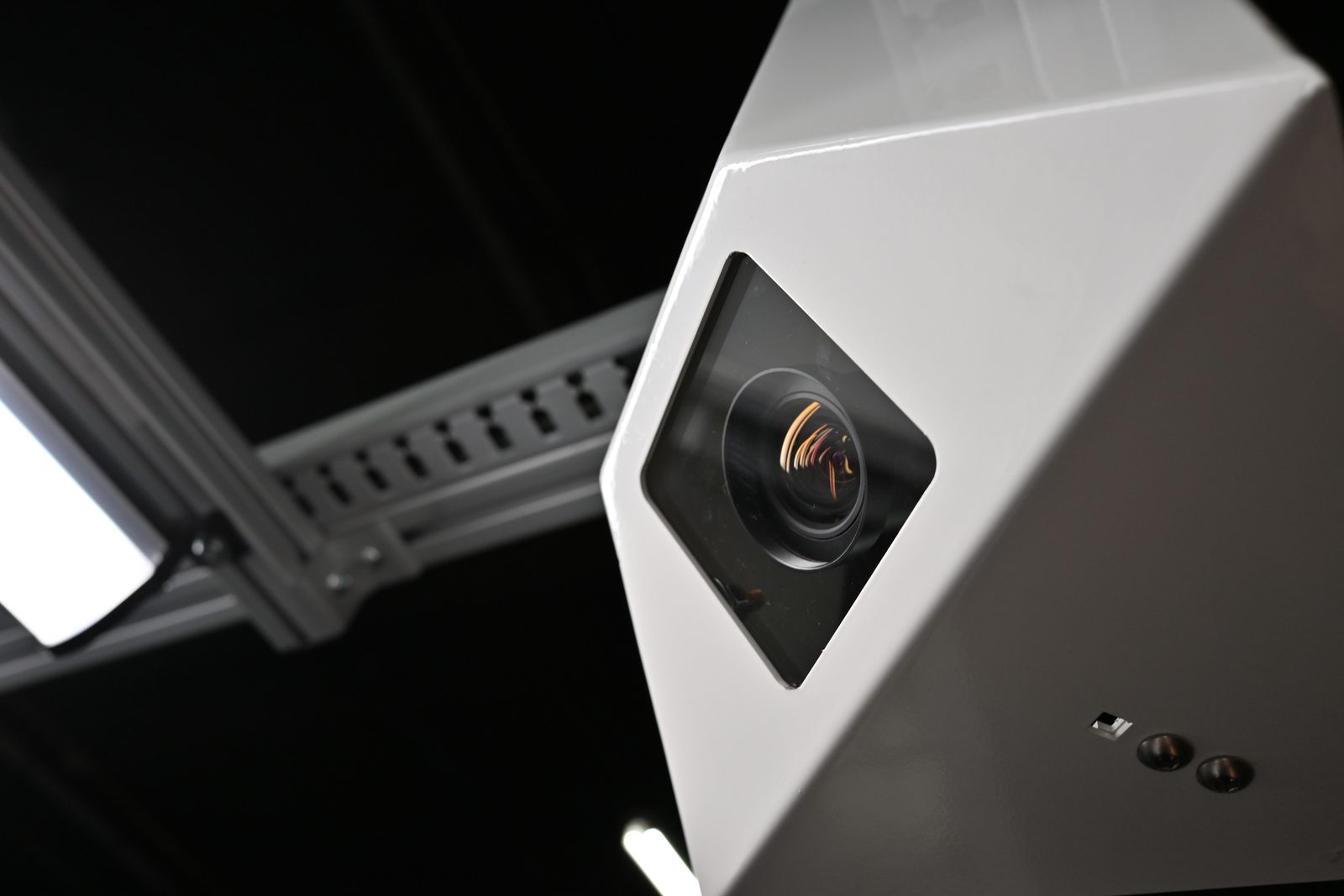
Cameras capture each bag as it moves — at the bag drop, on the conveyor, through screening, or at the e-gate. No new process for your teams, no pause or disruption to bag or passenger flow, no bag held up for a photograph.
Below the wing: multi-angle capture at the bag drop builds the reference profile that everything downstream matches against.
Above the wing: e-gate cameras detect every cabin item as passengers pass.
Images are processed at the airport edge. Faces and privacy classified data are blurred at the point of capture. What the models read is the bag.
One capture. Many answers.
The same image set that enrols or identifies a bag can also describe it. Identity, type, size, tag state, condition — all read from the capture that's already happening.
New capability arrives in software, on the hardware already on your line.
Which data you get depends on the product. Below the wing, BagBridge identifies the bag, and its SecureSight and BagHygiene modules add verification through screening and condition checks. Above the wing, CarryOn counts, classifies and sizes every cabin bag.

Data lands where decisions get made.

This is where the data turns into value. Our rules engine is configured to your business logic or shared to your existing systems.
Dashboards for your operations teams, and the BagTalk API into the BHS, DCS or analytics platform you already run. Real time data helping to solve real problems.
Data driven decision making is enabled across the journey. Bag drop is only allowed for bags with good hygiene and are sorted to the right location on time. Untagged bags are printed new tags. Ground handlers find lost or offload bags with visual support for faster recovery.
Alerts flag before a problem becomes an incident — a bag heading for manual encoding, a transfer bag that hasn't been matched, a tag problem caught at the bag drop rather than three conveyors later. A loose strap is put in a tub before it jams the conveyor and backs up into the departure lobby. Security teams are inspecting the at risk bags instead of lost in tracking bags. Insider threat issues are prevented with bag swap and condition alerts.
Nothing here asks your teams to learn a new way of working. The information arrives where they already look.
Works with the systems you already have
Nothing gets replaced. It layers on top of your existing tracking — ATR, RFID, encoder-based position tracking. No rip-and-replace.
Cameras retrofit onto existing conveyors and bag drops, lane by lane. No sortation rework. Vendor-agnostic BHS support, edge-level connectivity to PLCs and control systems, and the BagTalk API as the single surface for identity, imagery, events and analytics.
IATA Resolution 753 aligned.
Built on baggage data nobody else has.
Our models are trained on images from live airport operations, not staged datasets — bags on moving conveyors, bags that look identical, bags half-hidden behind others, in the lighting and clutter of a working baggage hall. That's the difference between a model that works in a demo and one that holds up at peak volume.
Every airport we add makes the models better for every airport already running them.
Baggage data only. No passenger data, no biometrics, processed at the edge.
Faces are blurred and people masked at the point of capture — for checked baggage and cabin baggage alike. Processing happens at the airport edge; no passenger images leave the building. The bag profile holds baggage attributes only.
BagsID identifies bags, not passengers.
Operational Environments
The aviation industry is driven by volume. With over 100,000 flights transporting approximately 30m bags per day, down time is front page news. BagsID leverages its scalable solution with active monitoring systems tested across multiple continents.
The BagsID monitoring system actively monitors the core infrastructure, internal and external services, system response times and overall performance. A dip in production, a heartbeat drop or anomaly message. All is monitored to ensure real time support and recovery to ensure continuous operations.
This is proven across millions of bag transactions already processed. The alerting system ensures our teams know before it impacts production.
Start small. Prove the value. Scale with confidence.
We prove the numbers on your own traffic and in your own environment before you commit to anything wider.
Validated in live airport environments with major airports and airlines in Europe and North America.