Fewer manual exceptions.
More bags stay identified when their tags can't be read, so fewer are sent to manual encoding and reconciliation.
BagBridge uses AI-powered visual identification to recognise checked bags when tags cannot be read, reducing manual exceptions while working alongside the baggage systems already in place.
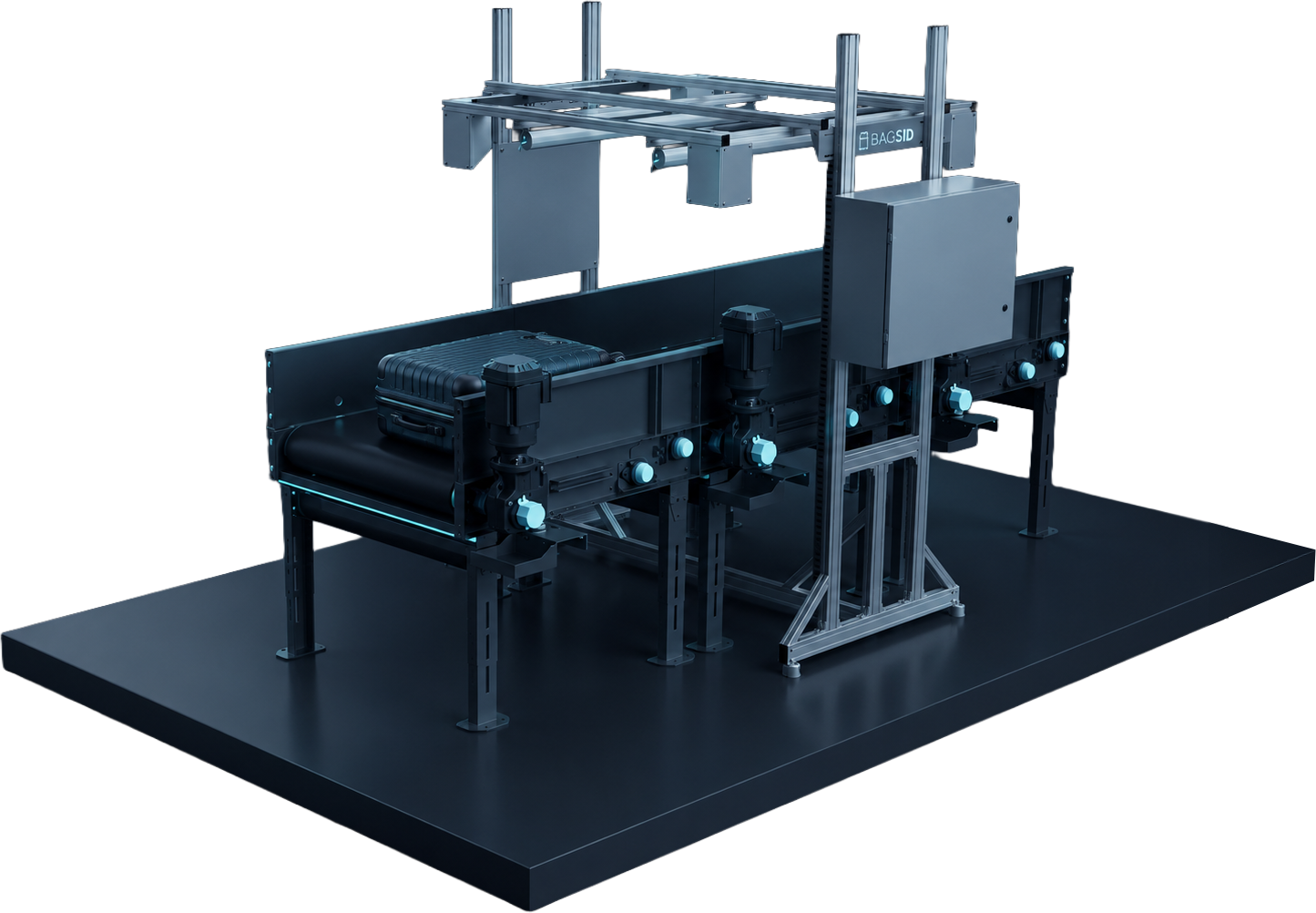
The industry has data about bags. Almost none of it comes from the bag. Identity, condition and size are largely absent from the record.
Resolution 753 tracks handoffs, not the bag. Between reads, the system knows where a bag should be — not where it is. 39% of mishandling happens in transfer.
The bag is still on the belt, but the system has lost it. Someone walks the line, reads it by eye and keys it back in. At peak, that queue is longest exactly when you can least afford it.
Tagging errors cause 4% of mishandling. The gaps between reads cause the rest.
Keep bags identified and give your teams the information they need to focus on the exceptions that matter.
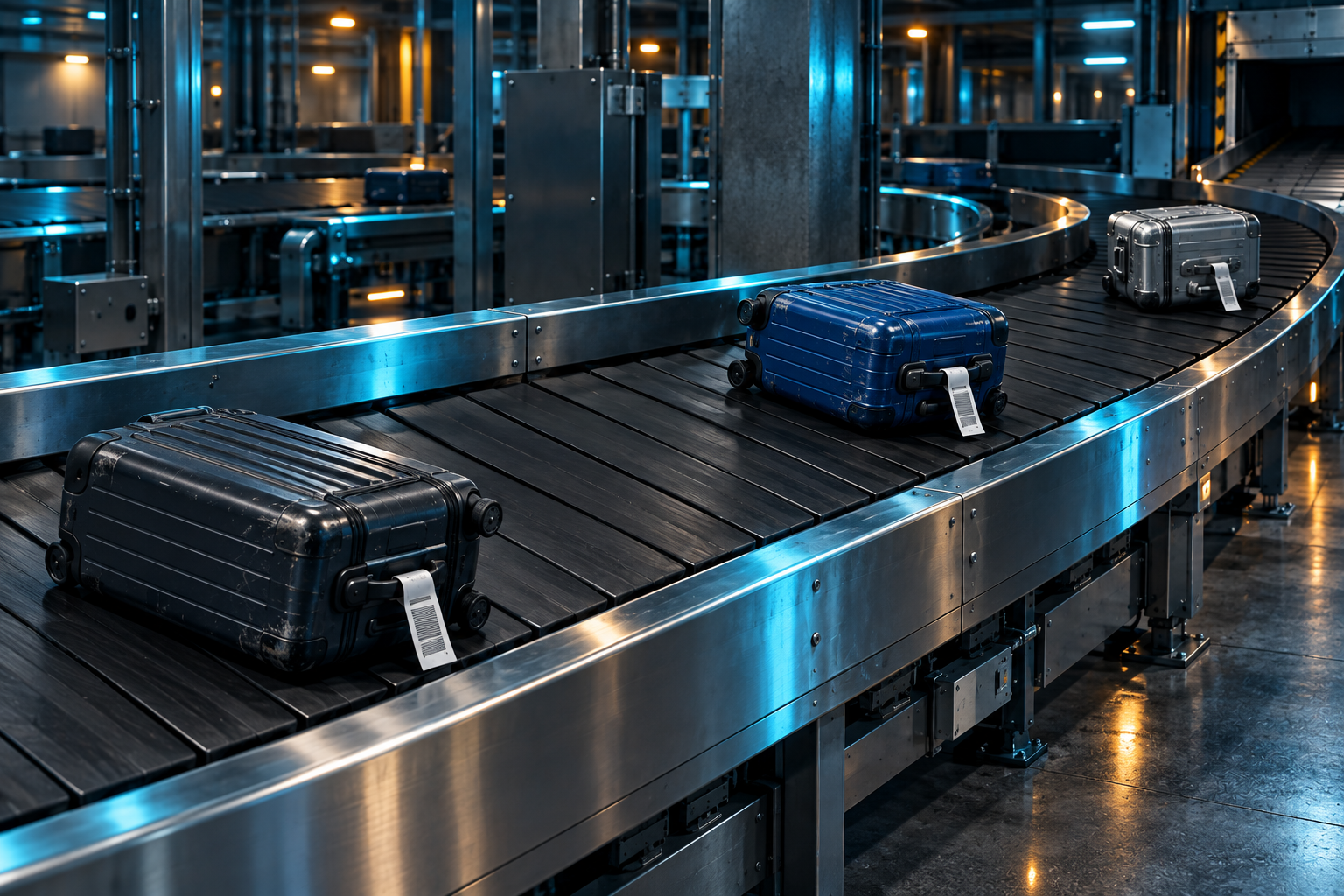
More bags stay identified when their tags can't be read, so fewer are sent to manual encoding and reconciliation.
Fewer unresolved bags means less recirculation, shorter exception queues and more predictable performance at peak volume.
Teams work the bags that genuinely need attention instead of searching across fragmented systems.
Visual identification is added to the baggage environment already in place. Existing BHS, ATR, airline and airport systems keep running.

Multi-angle images at every touchpoint, starting at the bag drop, where the first set becomes the bag's reference profile. No change to the workflow.
At every checkpoint through the BHS, the bag is matched against its profile. Identity holds whether or not the tag reads.
When the reader returns a no-read, BagBridge supplies the correct LPN to the BHS before the bag reaches the exception queue. Imagery and events flow to the operator dashboard and the BagTalk API.
Both modules run on the same cameras and the same inference pipeline. Nothing new goes on your line.
Restores a checked bag's identity inside the screening system, so a tracking error does not become a manual inspection. Bag matching through the CBIS, swap detection, abutted bag separation.
Uses the same capture to record what a bag is as well as which bag it is — tag state, rolling risk, loose straps, size and condition — so problems are caught before they reach the belt.
Nothing gets replaced. BagBridge deploys alongside the ATR, RFID and BHS you already own. Live PLC integration, no equipment replacement, no sortation rework.
And if we stop, you don't. BagBridge is additive, with a defined failure mode. If our system is unavailable, your baggage operation runs exactly as it does today.
Inference runs on-prem at the airport edge. Data stays local. Baggage data only — no passenger data, no biometrics.
Modular by touchpoint: bag drop, sorter, ramp, carousel. The BagTalk API exposes identity, imagery and event data to your operations stack.
Supplies tracking evidence for IATA Resolution 753.
keep more bags moving through the automated process, especially when the operation is busiest.
For Airportskeep the bag visible through the handoffs where baggage journeys most often break.
For Airlinesmake the baggage systems you deliver perform even better.
Talk to our teamThe technology is ready and proven. We work with you to prove the value in your own environment, in line with your operational needs and support the business case needed before you commit to anything wider.
Validated in live airport environments with major airports, airlines and agencies in Europe and North America.