Computer vision, built for baggage.

To bring the baggage journey into the digital age.

BagsID was built to solve one of aviation’s oldest unsolved problems. Our models are trained in live baggage halls, on bags that are crushed, wrapped, wet, and moving at speed.

Our experience

Over 100 years of aviation experience.

We're computer-vision researchers and machine-learning engineers, data scientists and platform engineers, baggage operations and field-deployment specialists. Several of us ran international airline baggage programmes and core airport IT systems before joining. This is a team that has spent 5am in a baggage hall during a commissioning week — and that's where the product comes from.

Why we exist

The industry can track a tag. It cannot see the bag.

Baggage records are created the moment something reads a tag. Between those scans, and in the cabin where there is no tag at all, the operation is working blind. That gap costs the industry 24 million mishandled bags and $6.3 billion a year — and it is the last part of the passenger journey that never went digital.

We started BagsID because the answer was never going to come from a better tag. It had to come from the bag itself.

Why it works

Every deployment makes the next one better.

Our models learn from baggage in live operation — in motion, at speed, in poor light, crushed against each other on a moving belt. Those are conditions no dataset can simulate and no lab can recreate.

And in a live baggage handling system, a correct tag read is ground truth. Every lane we run adds verified labels automatically, so the system keeps learning from the operation itself. That advantage compounds. It isn't something that can be bought — only built, one live deployment at a time.

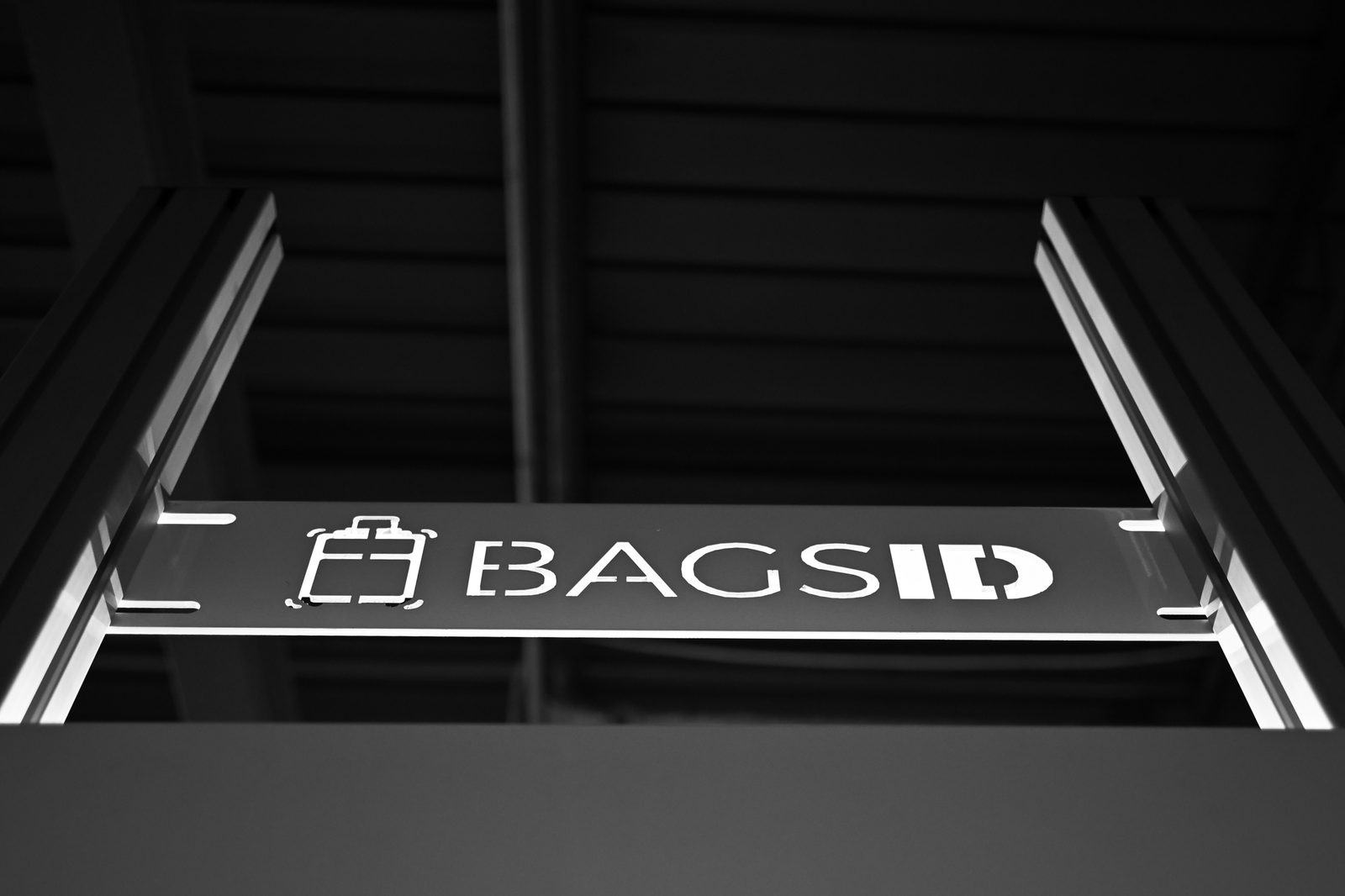
The BagsID logo cut into the baggage scanning arch
How we work

We fit into what you already run.

01

Layer, don't replace.

BagsID sits on top of the infrastructure you already have — baggage handling systems, tag readers, screening equipment. Nothing gets ripped out, no sortation logic gets reworked. If our system stops, yours keeps running exactly as it does today.
02

Start small, on your own bags.

Every deployment begins on one lane, one bag drop or one gate. We prove the numbers on your traffic before anyone commits to anything wider. Three to five months from contract to live.

03

Bags, not passengers.

We identify baggage. No biometrics, no facial recognition, no passenger data. The system answers questions about bags and nothing else — privacy by design.

04

The system watches itself.

Camera health, image quality and processing performance are monitored continuously from the day you go live. If something degrades, we see it and you see it at the same moment — typically before anyone in the operation notices.

Where we are

Validated where it matters.

BagsID is validated in live airport environments with major airports and airlines in Europe and North America. Every one of those deployments runs on infrastructure the operator already owned, in live operations, at real volume — not in a lab.

Our teams are based in Amsterdam, the United States and India.

Partners

We work inside the ecosystem, not against it.

BagsID is a layer on top of infrastructure that already exists. We don't replace baggage handling systems, tag readers or screening equipment — we make them perform better. That means almost every supplier in this industry is a potential partner rather than a competitor.

Enabling partners

Airports and airlines that opened their doors early and let us prove the technology on live operations.

Delivery partners

Integrators and engineering partners who bring BagsID into the systems they build and maintain.

Industry partners

Organisations that share our intent to modernise how aviation handles baggage.

Leadership

The people behind the models.

Baggage is an operational problem and a technical one. Our leadership team is built for both.

Oskar Lauritzen

Oskar Lauritzen

Chief Executive Officer

Oskar is a commercial CEO, operator and former founder with 25 years of international C-level experience, two SaaS exits and a merger. As co-founder and CEO of Composite A/S, he took it to 80,000+ installations in 100+ markets, then became Managing Director EMEA in a 1,000-person group. He has also led a US go-to-market, invested in and advised scaleups.

Richard Camman

Richard Camman

Chief Business Officer

Richard is an industry visionary with extensive experience in ideating and implementing transformational passenger processes. With 20+ years of management experience he knows how to connect people, ideas and ultimately build a team, partnerships and culture motivated towards a common goal. His critical analysis and problem solving were formed through his consulting days including 5 years as a Partner at Accenture.

Aaron Beeson

Aaron Beeson

Chief Operating Officer

Aaron is our global citizen with tremendous aviation and security experience across the world designing new solutions, implementing change and leading organisations. Previously he led innovation for the world’s largest private airport operator and understands the change we are bringing to the industry. Now he leads the day-to-day operations of the company as we define and execute our strategy.

Eric-Paul van Woerkom

Eric-Paul van Woerkom

Co-Founder and Chief Information Officer

EP has a robust track record in overseeing large-scale IT and business projects in finance, marketing and healthcare. From enterprise-wide digital transformation to implementing cloud infrastructures to streamline operations to implementing strategic global projects, he has seen and experienced it all.

Wim Elhorst

Wim Elhorst

Chief Technology Officer

35 years expertise in software engineering. Recognised expert in agile and lean software development. Engineered solutions for automotive and aircraft simulation and testing systems, motion systems and mission critical systems.

Come see it

If you want to see it running, ask.

Every site can host a visit. Start with one lane and we'll prove the numbers on your own traffic.